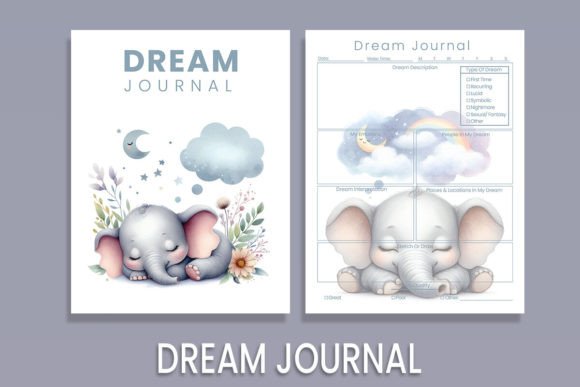
Dream Journal Sleep Tracker
For those who want to explore the hidden world of their dreams, a Dream Journal Sleep Tracker offers a powerful tool for self-discovery and creative inspiration. This resource is more than just a journal—it's a structured system that helps you record, analyze, and reflect on your sleep patterns and dream experiences. Whether you're a writer, artist, or simply curious about your subconscious, this tracker can be a valuable addition to your daily routine.
The Dream Journal Sleep Tracker comes in multiple formats, including AI files, PDFs, SVGs, and high-resolution two-page layouts in CMYK color at 300 DPI. These versatile options make it easy to use the tracker across different platforms and projects. You can print it for a tactile experience, digitalize it for mobile tracking, or integrate it into larger creative works like books, presentations, or online content.
What Makes It Useful
A Dream Journal Sleep Tracker isn't just about recording what you dreamed. It’s about creating a habit of mindfulness and reflection. By consistently noting details like the time you fell asleep, how long you slept, and the emotions or images that appeared in your dreams, you begin to see patterns and connections that might otherwise go unnoticed.
Many users find that keeping a dream journal improves their memory, enhances creativity, and even supports emotional well-being. The act of writing down your dreams can help you process thoughts and feelings, offering a unique form of therapy. With the right structure, this practice becomes more than a personal habit—it becomes a creative tool.
Creative Possibilities
The Dream Journal Sleep Tracker opens up a range of creative possibilities. Artists might use it as a source of visual inspiration, translating dream imagery into paintings, illustrations, or digital art. Writers could draw from their dreams to develop story ideas, characters, or plot twists. Marketers and designers might use it to spark new concepts for campaigns or branding strategies.
For educators, the tracker can be a classroom activity that encourages students to explore their imagination and critical thinking skills. Entrepreneurs might use it to tap into subconscious insights that lead to innovative business ideas. And for hobbyists, it can be a fun way to engage with the mysterious and surreal aspects of the mind.
Adapting for Different Goals
The beauty of the Dream Journal Sleep Tracker lies in its adaptability. You can tailor it to suit your specific needs, whether you're focused on improving sleep quality, unlocking creativity, or deepening self-awareness. For example:
- Sleep Improvement: Track your sleep cycles, note any disruptions, and identify habits that affect your rest. Use this data to make informed changes to your bedtime routine.
- Creative Development: Use the journal to document recurring symbols or themes in your dreams. These can serve as prompts for writing, art, or music.
- Personal Growth: Reflect on the emotional tone of your dreams and how they relate to your waking life. This can lead to greater self-understanding and emotional clarity.
Whether you're using it for personal reflection or professional development, the Dream Journal Sleep Tracker provides a flexible framework that can evolve with your goals.
Practical Applications
There are many practical ways to incorporate the Dream Journal Sleep Tracker into your daily life. One approach is to keep it by your bedside and write in it immediately after waking. This helps capture the most vivid details before they fade. Another method is to use it alongside a meditation or relaxation practice, allowing you to connect more deeply with your inner world.
You can also use the tracker to experiment with different styles of journaling. Some people prefer free-form writing, while others like to categorize their dreams by theme, emotion, or symbolism. The tracker’s design allows for both structured and spontaneous approaches, making it accessible to all types of users.
Examples and Inspiration
Imagine using the Dream Journal Sleep Tracker as part of a weekly creative challenge. Each week, focus on a different type of dream—like nightmares, lucid dreams, or recurring dreams—and explore how they influence your work. You might create a series of drawings based on your dreams, write a short story inspired by a particular image, or compose a song that captures the mood of a recent dream.
Another idea is to share your dream journal with a group or community. This could be a writers’ circle, an art collective, or an online forum where people exchange dream interpretations. Sharing your experiences can lead to new perspectives and collaborative opportunities.
Keeping It Effective and Organized
To get the most out of the Dream Journal Sleep Tracker, it's important to maintain consistency and clarity. Here are a few tips:
- Be Specific: Instead of writing "I had a strange dream," try to describe what happened, how it felt, and any memorable details.
- Use Prompts: If you're struggling to remember a dream, use guided questions like "What was the setting?" or "Who was in the dream?"
- Review Regularly: Set aside time each week to look back at your entries. This helps you spot patterns and gain deeper insights over time.
By staying organized and intentional, you can turn your dream journal into a meaningful and impactful practice.
Conclusion
The Dream Journal Sleep Tracker is more than just a tool for recording dreams—it's a gateway to creativity, self-awareness, and personal growth. Its versatility makes it suitable for a wide range of users, from artists and writers to educators and entrepreneurs. Whether you're looking to improve your sleep, unlock new ideas, or simply understand yourself better, this tracker offers a practical and inspiring way to explore the world of dreams.